Fullstack Academy capstone
The social deduction game, played over webcams in a browser.
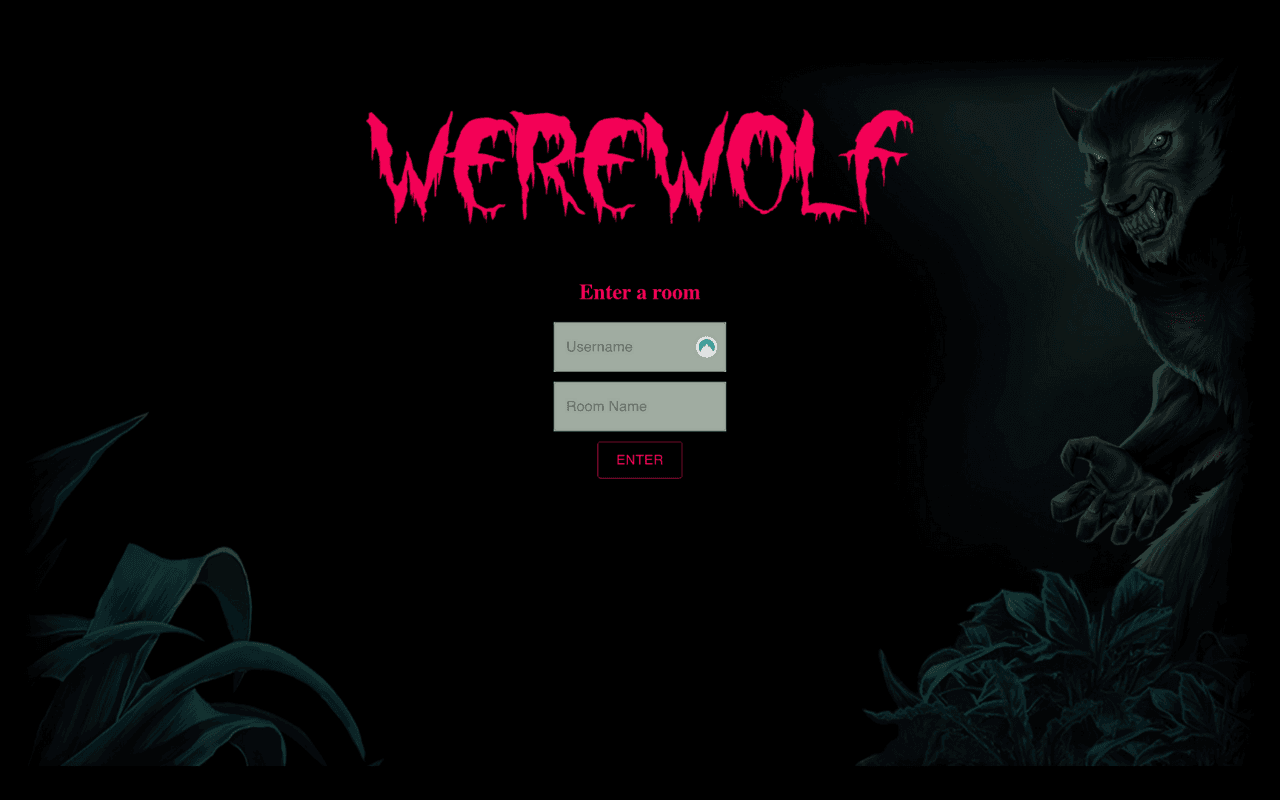
For the final project at Fullstack Academy, we were split into teams of four and given two and a half weeks to define and develop a project. Everyone in our group was a fan of tabletop games, and we decided to give new life to an old concept. The game we settled on was Werewolf, a social deduction game where some players are on the bad team and others are on the good team, but neither player knows the other’s identity. Throughout the game, players vote to kill each other based on their suspicions, and the last team standing wins. Our team put a new spin on it by letting groups form inside online video conferences and by programmatically managing all of the events in the game.
How a round runs
The game proceeds in alternating night and day rounds, beginning with night. At the beginning of the night, only the werewolves can see. Everyone else is sleeping, so their video is stopped. While everyone sleeps, the werewolves choose a villager to kill. When they have made their kill, they too sleep.
After the werewolves have made their kill, the village doctor awakens and, not knowing who has been killed, chooses a villager (who can be themselves) to heal. The villager chosen will survive the night if the werewolves chose to kill them. Once the doctor has made their choice, they go back to sleep.
Next, the village seer awakens. The seer can choose one villager to have their true identity revealed. If the villager chosen is a werewolf, the seer will be told so. Otherwise, the seer returns to sleep.
Once the seer has finished, we transition to daytime, and the villagers find out who has been killed during the night. That villager is immediately dead and out of the game. They do not reveal their identity.
Daytime is very simple. All the living villagers gather and decide whom to kill in hopes of ridding themselves of werewolves. As soon as a majority votes for a single villager, that villager is immediately dead and out of the game.
There are no restrictions on speech. Any living villager can say anything they want: truth, misdirection, nonsense, or a bare-faced lie. Dead villagers may not speak at all. If a villager senses the others are beginning to turn on them and they want to protest their innocence or reveal some information, such as the seer’s visions, they must do it before the votes go through.
Once a player is killed, night falls, and the cycle repeats. The villagers win if they kill all of the werewolves. The werewolves win if they kill enough villagers that the numbers are even.
Related

Celebrating seven winners from the MLH x Midnight July hack
A write-up of the July hackathon: 84 teams built on zero-knowledge technology and seven won across privacy infrastructure and gaming.
Blockchain & Web3, Gaming
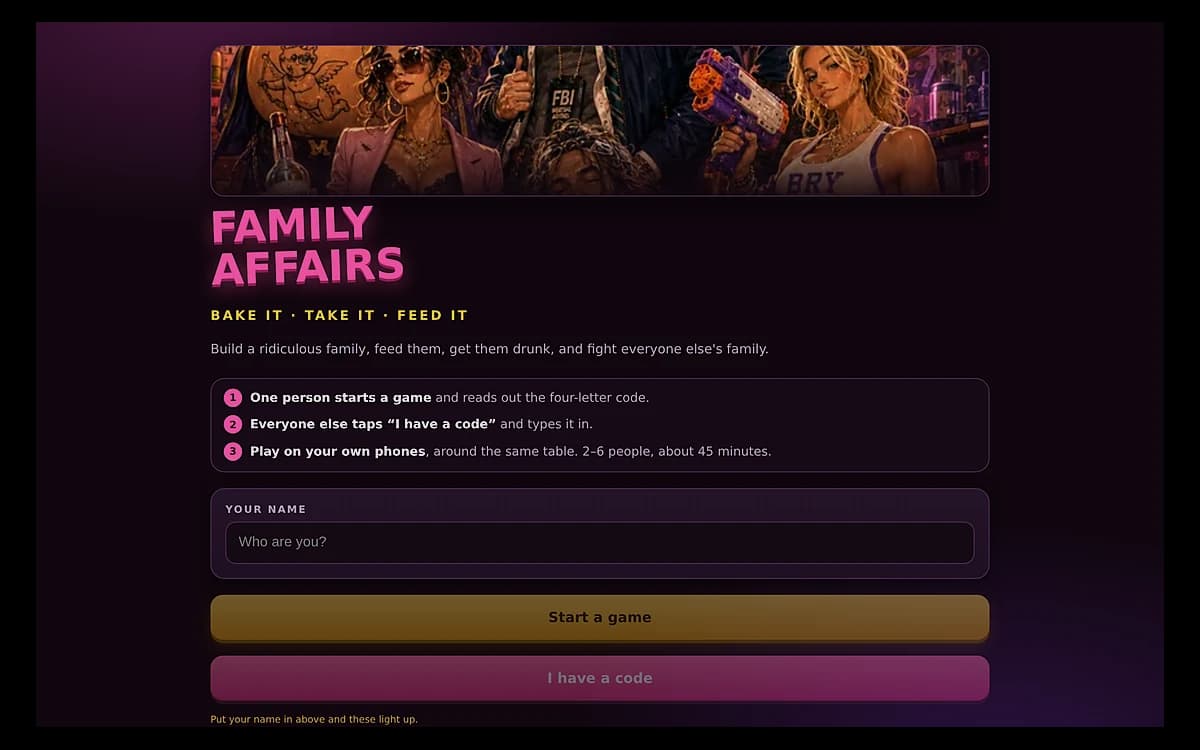
Family Affairs
A competitive family battle card game for two to six players, played live on their own phones.
Gaming
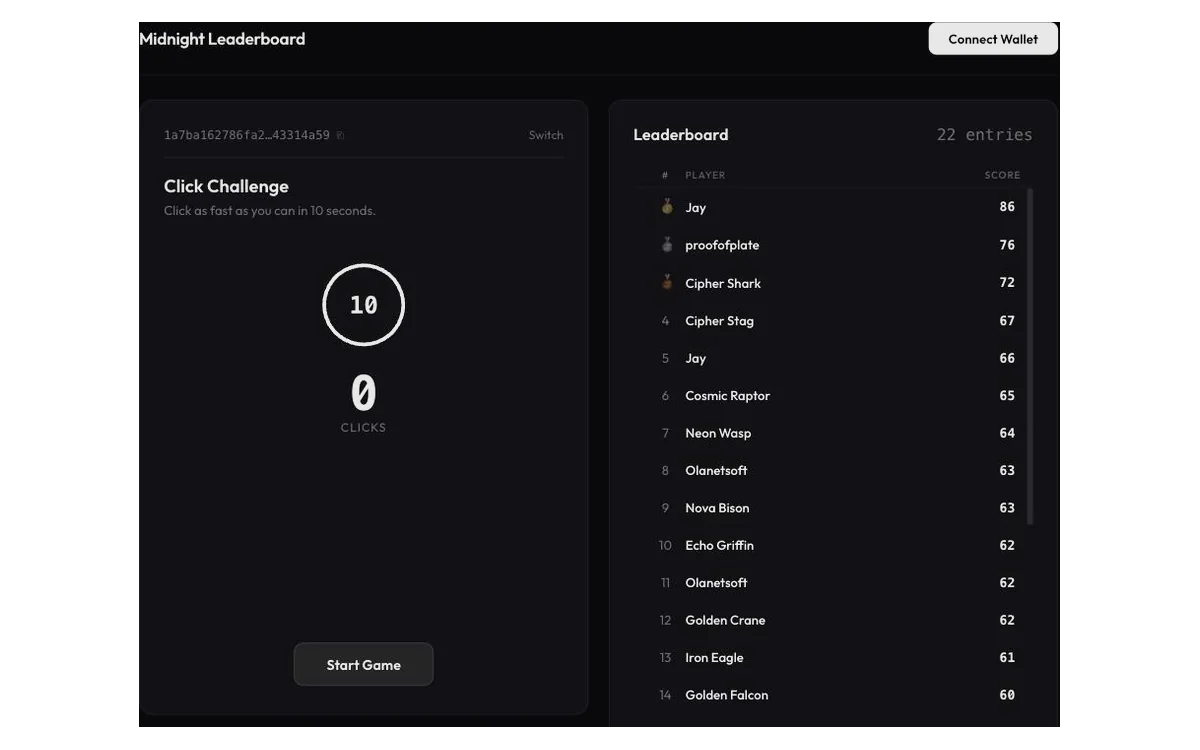
Midnight Leaderboard
An arcade-style leaderboard where the player decides how they appear: anonymous, as a wallet address, or under a name they choose.
Blockchain & Web3, Gaming